Across oceans and cultures, a few communities became known for an unusual number of people living long, active lives. Their lesson is not a miracle ingredient. It is a way of living—one meal, one walk, one friendship and one meaningful day at a time.
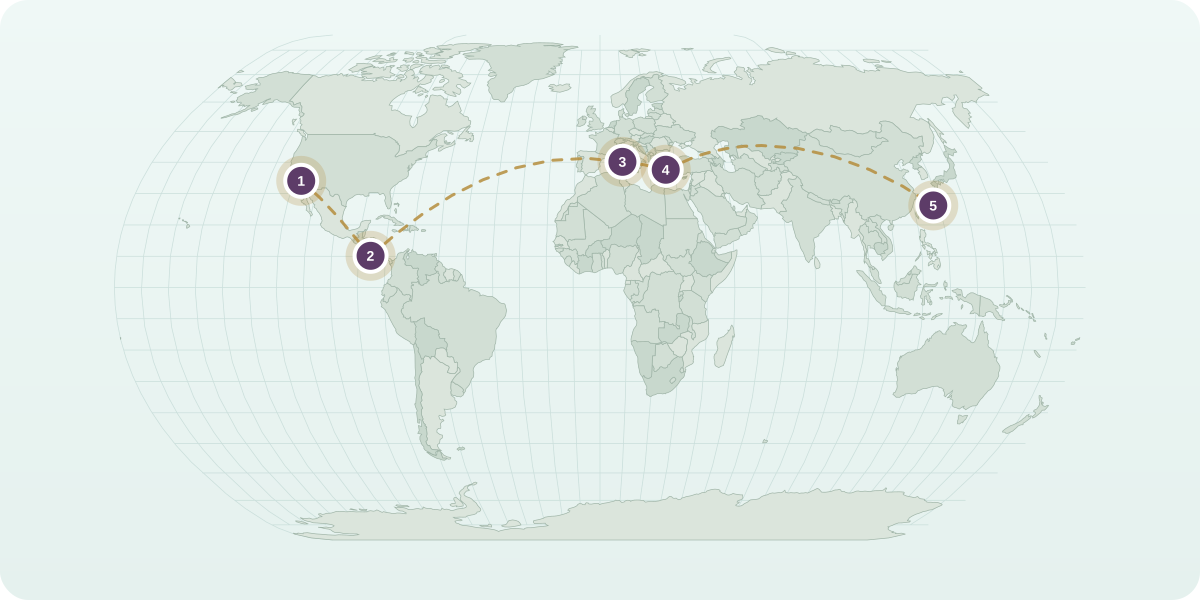
“Blue Zones” is the name popularized by explorer and author Dan Buettner for five regions associated with exceptional longevity: Okinawa, Sardinia, Ikaria, the Nicoya Peninsula and the Seventh-day Adventist community in Loma Linda.
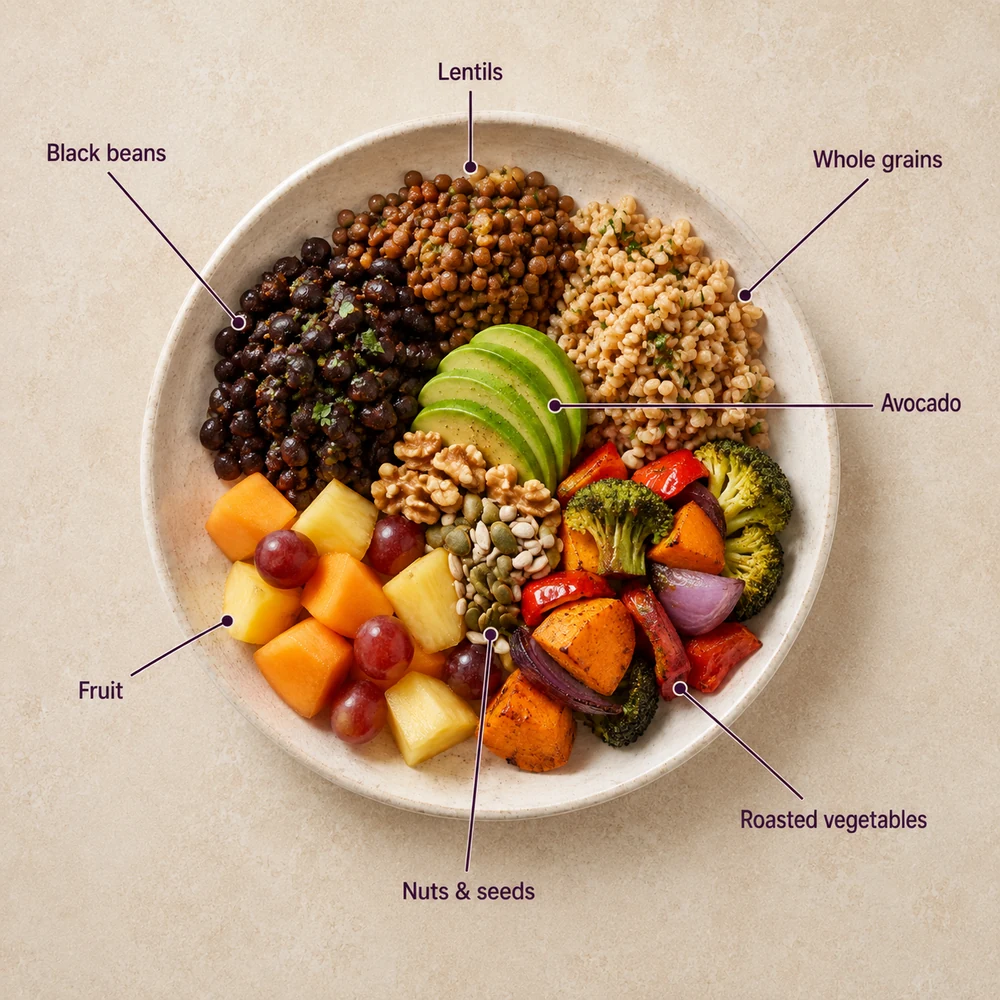
The idea is compelling because health appears woven into everyday surroundings. Traditional meals lean heavily on beans, vegetables, whole grains, fruit, nuts and seeds. Walking is useful, family and friends are close, and purpose continues well beyond retirement.
A community where faith, rest and fellowship help shape the week.
Many Seventh-day Adventists in Loma Linda traditionally emphasize vegetarian meals, avoid tobacco and make time for worship, family and community. The rhythm is as important as the menu: a weekly Sabbath creates a deliberate pause from ordinary demands.
Simple staples, strong families and a plan de vida—a reason to rise each morning.
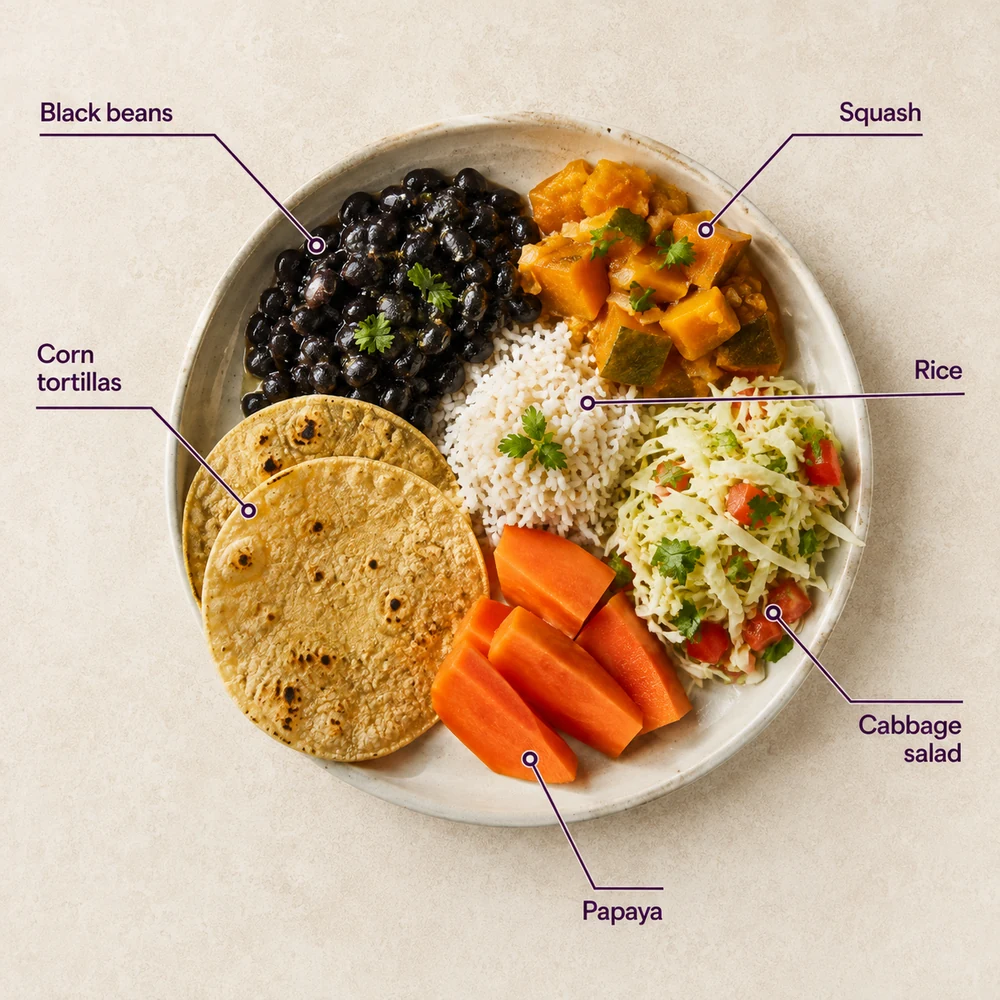
The traditional Nicoyan table is built around the “three sisters” of beans, corn and squash, joined by tropical fruit and garden produce. Meals are often modest and familiar rather than elaborate.
On the table
Black beans, corn tortillas, squash, papaya, bananas, yams and seasonal vegetables.
Beyond the plate
Family networks, physical work, sunshine, purposeful days and a light evening meal.
Recipes connected with Nicoya
Modern recipes linked by shared ingredients—not presented as traditional regional dishes.
A rugged landscape where walking, family and pastoral food traditions meet.
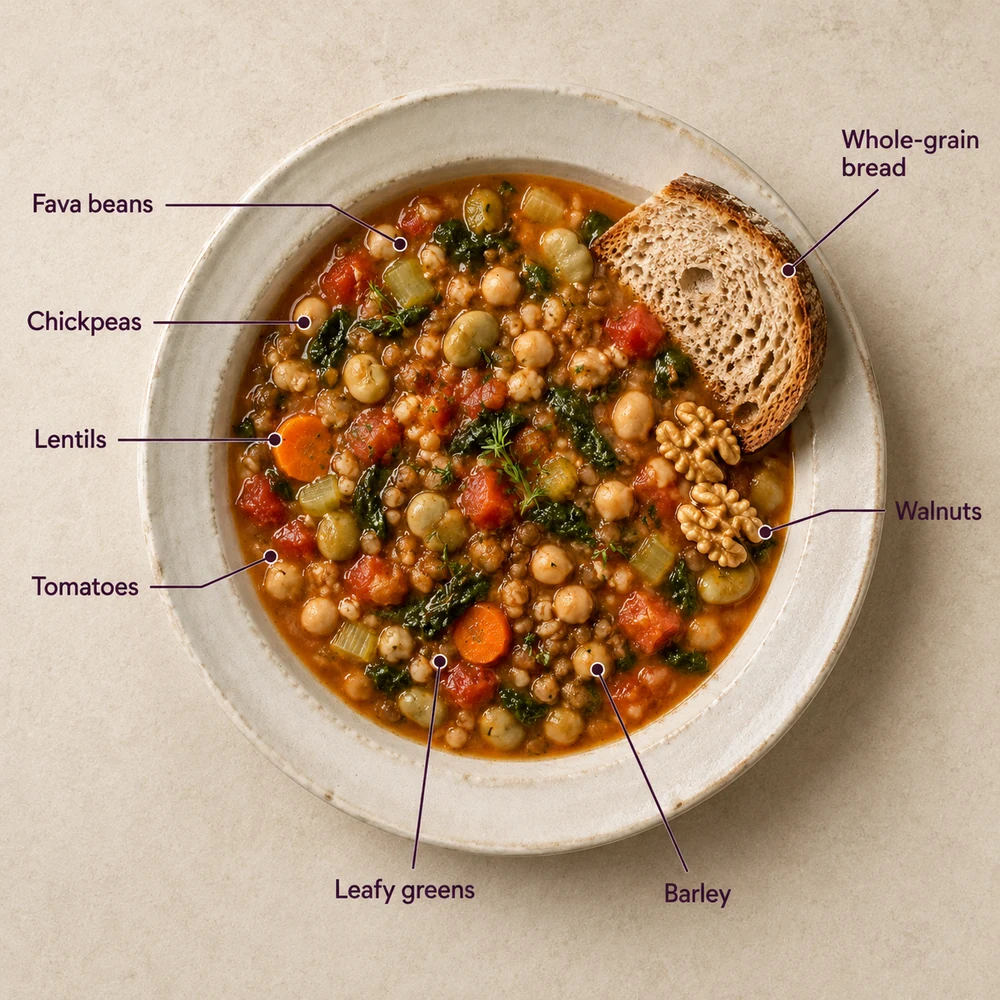
In Sardinia’s interior, traditional meals feature minestrone-like soups, beans, garden vegetables and hearty whole-grain breads. Historically, shepherding and steep village streets made movement a natural part of life.
On the table
Fava beans, chickpeas, lentils, tomatoes, greens, barley, sourdough-style breads, nuts and herbs.
Beyond the plate
Hill walking, multigenerational family life, humor, friendship and respect for elders.
Recipes connected with Sardinia
Modern recipes linked by shared ingredients—not presented as traditional regional dishes.
An island pace shaped by gardens, hills, afternoon rest and long conversation.
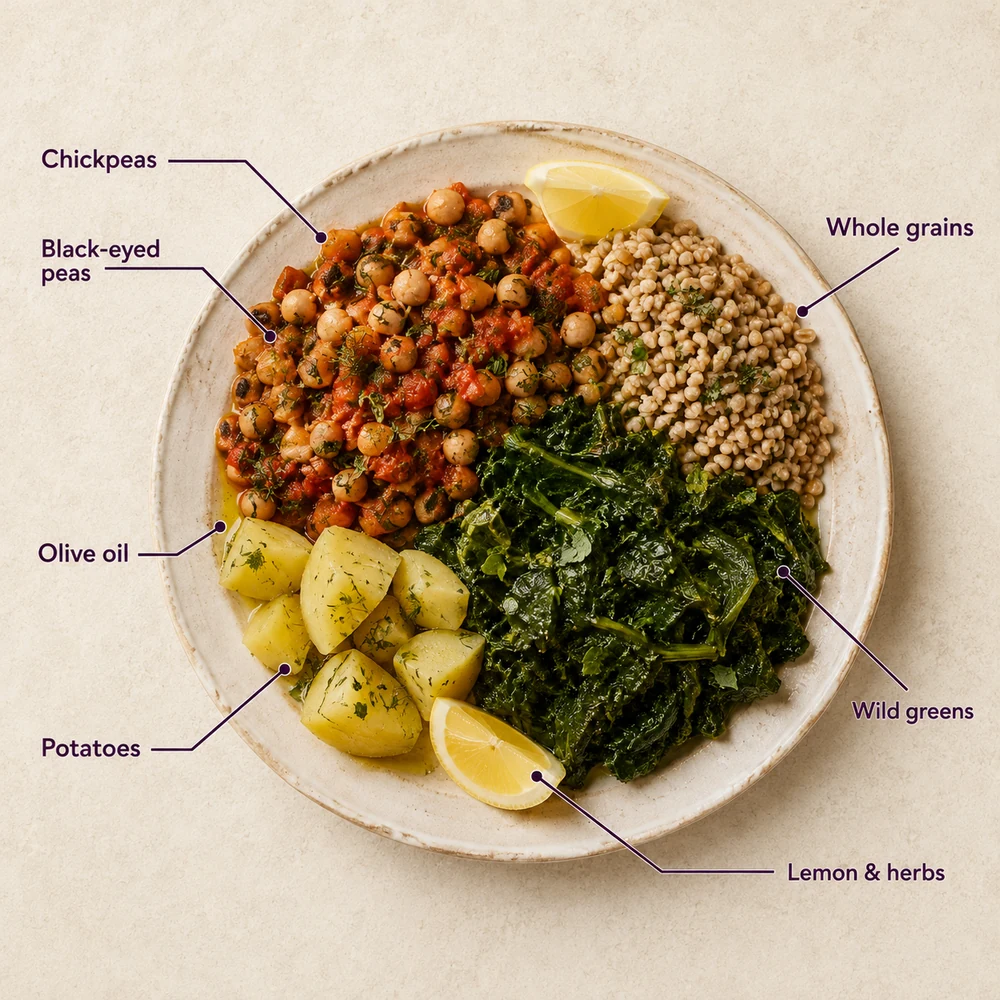
Ikarian food resembles a rustic Mediterranean pattern: generous vegetables, beans, potatoes, whole grains, olive oil and wild greens. Herbal teas and seasonal ingredients reflect what the island landscape provides.
On the table
Lentils, chickpeas, black-eyed peas, potatoes, tomatoes, wild greens, whole grains, olive oil and herbs.
Beyond the plate
Gardening, walking over hilly terrain, naps, unhurried social time and close community.
Recipes connected with Ikaria
Modern recipes linked by shared ingredients—not presented as traditional regional dishes.
Ikigai gives the day purpose; moai gives the journey companions.
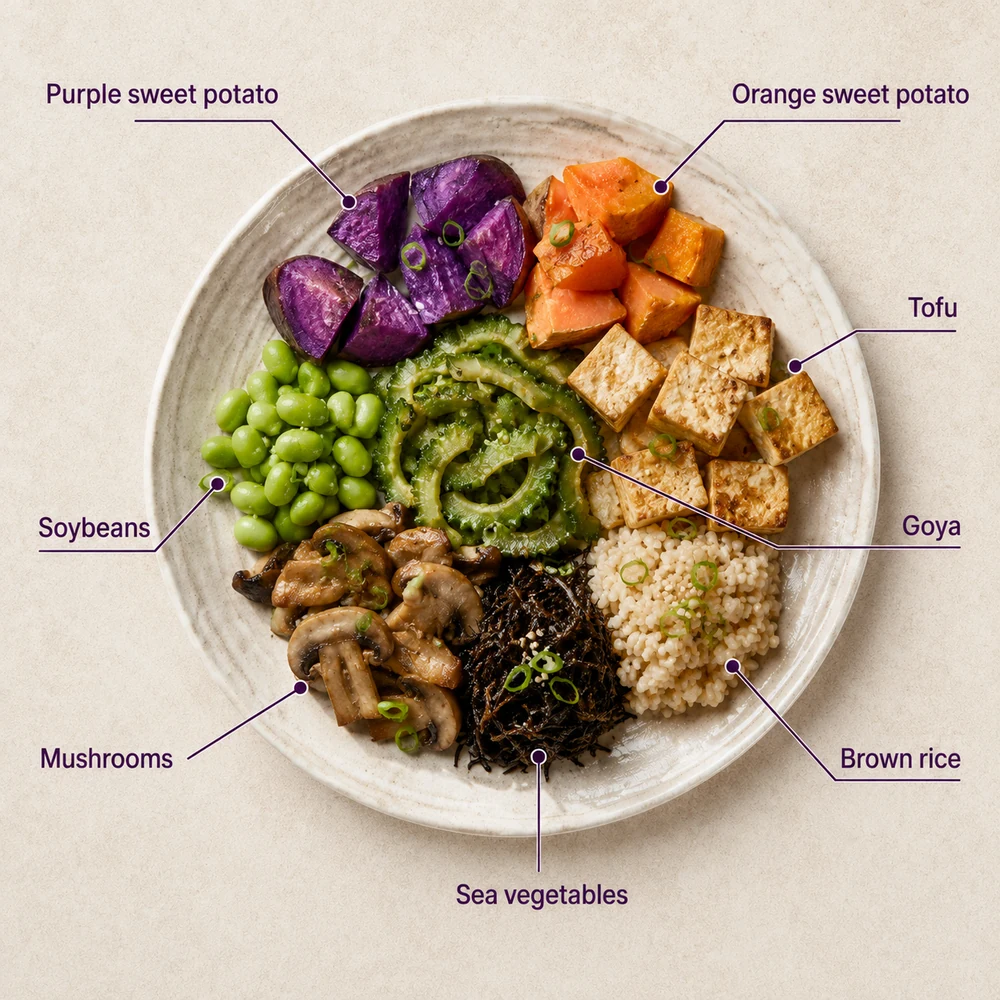
The traditional Okinawan pattern is vegetable-rich, with purple and orange sweet potatoes historically supplying much of the diet’s energy. Soy foods, sea vegetables and modest portions add variety. Hara hachi bu expresses the practice of eating until comfortably—not completely—full.
On the table
Sweet potatoes, tofu, soybeans, bitter melon, sea vegetables, mushrooms, turmeric and green tea.
Beyond the plate
Lifelong friendship circles, gardening, floor-level movement, purpose and honoring elders.
Recipes connected with Okinawa
Modern recipes linked by shared ingredients—not presented as traditional regional dishes.
The details change from island to mountain town, yet several patterns repeat.
01
Plants lead the plate
Beans, greens, vegetables, whole grains, fruit, nuts and seeds form the everyday foundation.
02
Move without scheduling it
Walk, garden, climb, carry, cook and keep daily life physically engaged.
03
Know your “why”
Purpose can live in work, caregiving, creativity, faith, learning or service.
04
Belong somewhere
Family, friends and community make healthy routines easier—and life richer.
05
Make room to exhale
Prayer, rest, tea, conversation, nature and quiet rituals can interrupt chronic stress.
06
Let enough be enough
Eat attentively, savor slowly and notice comfortable satisfaction before overfullness.
Connection, Joy & Well-Being
Laughing Your Way Toward Better Health
Laughter does more than brighten a moment. Time spent laughing with family and friends can strengthen connection, interrupt stress and add joy to everyday life. Health is supported not only by what we eat and how we move, but also by the people and experiences that make life worth enjoying.
Your Blue-Zone-Inspired Week
You do not need to move to an island
Longevity is not a destination we reach in one dramatic leap. It is the direction created by many ordinary choices.
MonAdd beans or lentils to one familiar meal.
TueTake a ten-minute walk after lunch or dinner.
WedShare food—or an unrushed conversation—with someone you value.
ThuPut an extra vegetable and color on the plate.
FriProtect a small pocket of time for rest.
WeekendCook, garden, explore or volunteer with purpose.
The WomenFirst Perspective
Longer life matters. Healthier years matter even more.
Across adulthood, habits that support cardiovascular and metabolic health can also help protect mobility, cognition, bone and muscle. Those priorities become especially meaningful through pregnancy, menopause and the decades beyond.
Heart & circulationFiber-rich foods, movement and blood-pressure awareness
Bone & muscleAdequate protein, calcium, vitamin D and resistance activity
Brain & moodConnection, purpose, sleep, movement and vascular health
Metabolic healthWhole foods, steady routines and individualized medical care
Dr. Alexander shares evidence-based ideas in a practical, nonjudgmental way, always in the context of your health history, priorities and real life. Inspiration from long-lived communities can begin a conversation—it does not replace personalized care.
The regional descriptions and shared patterns draw from the original Blue Zones explorations. Broader healthy-aging guidance is cross-referenced with public-health sources. “Blue Zones” and “Power 9” are trademarks of Blue Zones, LLC; Women First Morgantown is not affiliated with or endorsed by Blue Zones, LLC.
A friendly note: This page offers general wellness education. Longevity varies widely, and no dietary or lifestyle pattern guarantees prevention of disease or a particular lifespan. Talk with your healthcare professional about changes appropriate for you.