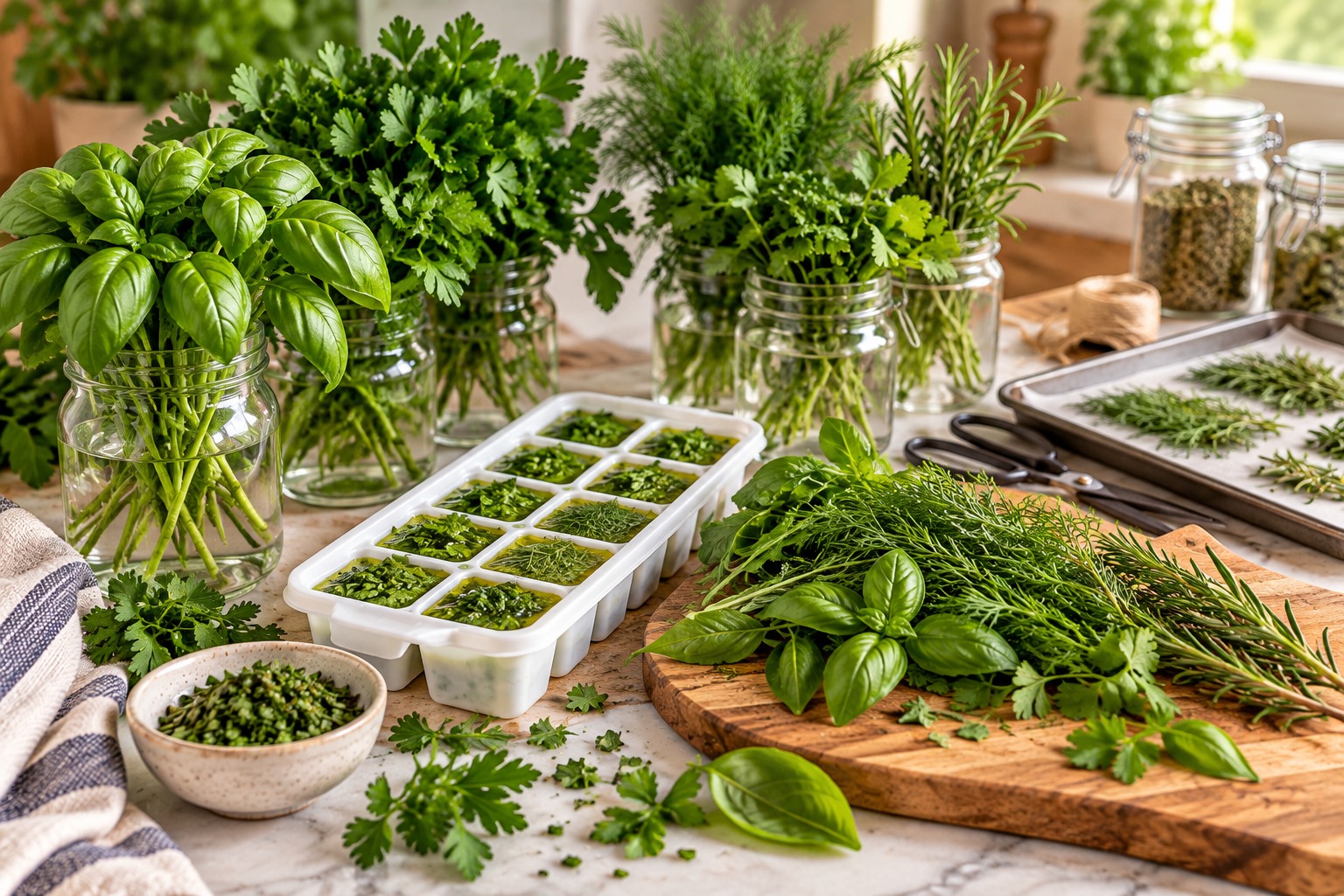
Fresh Herb Storage
Parsley and cilantro
Trim the stems, place in a jar with a small amount of water and loosely cover before refrigerating. Change the water as needed.
Basil
Treat basil more like cut flowers: trim the stems and keep at room temperature in water, away from direct sun and cold refrigerator air.
Rosemary, thyme and sage
Wrap loosely in a barely damp paper towel and refrigerate in a breathable or loosely closed container.
Freeze Herbs for Cooking
Whole leaves
Wash and dry completely, then freeze sturdy herbs in a single layer before transferring to a freezer container.
Herb cubes
Chop herbs and freeze in ice-cube trays with water for soups or with olive oil for cooked dishes. Label the tray so you know which herb and liquid you used.
Pesto-style portions
Blend herbs with a small amount of olive oil and freeze in small portions. Add nuts, cheese or nutritional yeast after thawing if you prefer.
Leafy Greens
Keep them dry
Excess moisture speeds spoilage. Store washed greens only after drying them thoroughly, with a clean towel or paper towel to absorb moisture.
Remove damaged leaves
A few wet or deteriorating leaves can shorten the life of the whole container.
Drying Herbs
Best candidates
Rosemary, thyme, oregano and sage dry more reliably than delicate herbs such as basil or cilantro.
Method
Use a food dehydrator or hang small bundles in a dry, well-ventilated space away from direct sun. Store only when completely crisp and dry.