Quick Substitution Chart
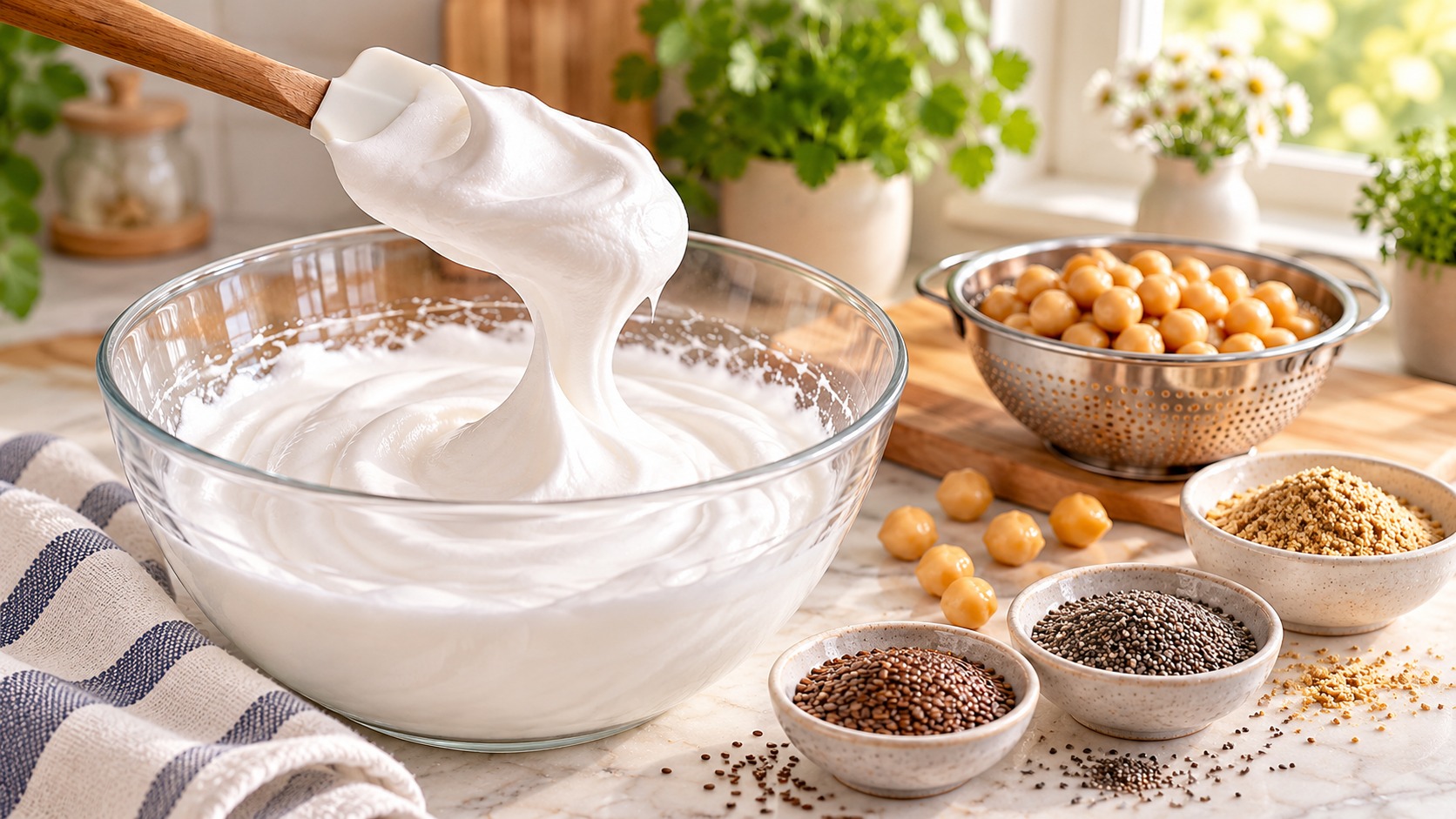
Aquafaba
3 tablespoons aquafaba ≈ 1 whole egg; 2 tablespoons ≈ 1 egg white. Best for whipping, light binding and some baked goods.
Flax egg
Mix 1 tablespoon ground flaxseed with 3 tablespoons water. Rest 5–10 minutes. Best for muffins, quick breads, pancakes and cookies.
Chia egg
Mix 1 tablespoon ground chia seed with 3 tablespoons water. Rest 5–10 minutes. Similar to flax but slightly more gel-like.
Commercial replacer
Follow the package ratio. These are often the most predictable option in cakes or baked goods where structure matters.
Working With Aquafaba
Use the right liquid
Liquid from canned chickpeas is the easiest starting point. Choose low-sodium or no-salt-added chickpeas when possible.
Whipping
Use a clean, grease-free bowl. Whip chilled aquafaba with an electric mixer until foamy, then continue until soft or stiff peaks form. A small amount of cream of tartar can improve stability.
Concentrate if needed
If the liquid is very thin, simmer it gently until slightly reduced, cool completely, then whip.
Know the Limitations
Not one-for-one in every recipe
Eggs provide structure, emulsification, moisture and leavening. No single substitute replaces every function perfectly.
Best matches
Use flax or chia for binding; aquafaba for aeration and whipping; commercial replacers when a recipe depends heavily on egg structure.