Health Journey / Nutrition & Lifelong Health
Fenugreek and Women’s Health: What Does the Evidence Say?
An everyday cooking ingredient has attracted medical interest. Early findings are promising in some areas, but the evidence remains limited or mixed.
Published October 2, 2026 · Women First Morgantown
Start with the question, not the promise
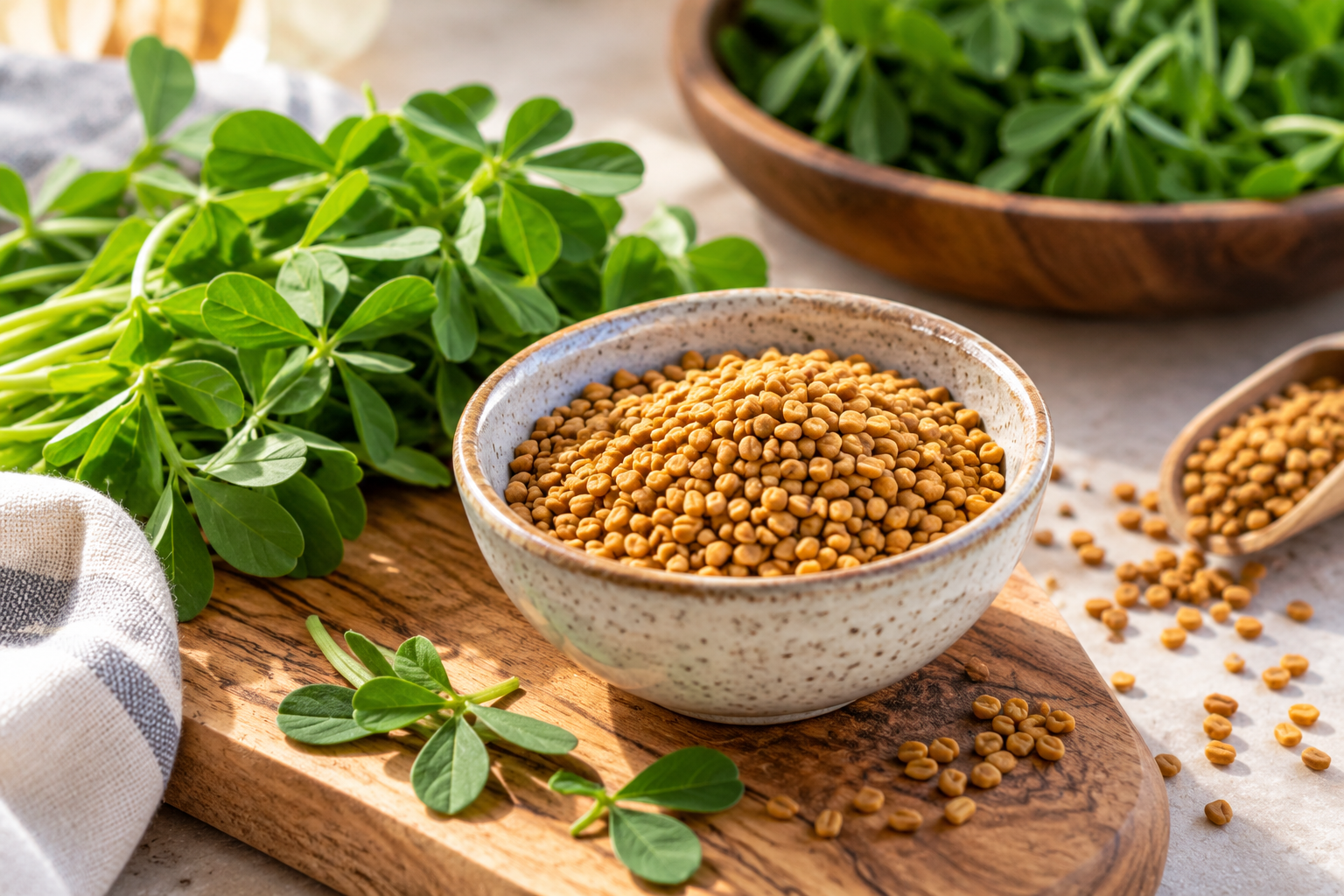
Fenugreek (Trigonella foenum-graecum) is used as seeds, ground spice and leafy greens. Research also tests powders and concentrated extracts. A positive result for one preparation does not establish that another product—or a pinch in dinner—will have the same effect.
NutritionFacts’ discussion of fenugreek and women’s health highlights encouraging studies and offers a starting point for reading. Our perspective also considers the uncertainty in reviews and safety guidance. Fenugreek has not been established as a treatment for the concerns below.
Period pain / dysmenorrhea
A placebo-controlled trial of fenugreek seed powder reported less menstrual pain over two cycles. However, a later systematic review judged the effect on pain intensity highly uncertain. Short follow-up and limitations in the available studies prevent a confident recommendation. [1] [2]
Persistent or worsening cramps deserve assessment, especially when accompanied by heavy bleeding or pain between periods. Explore our pelvic pain and painful-period care and abnormal bleeding guidance rather than relying on a supplement to explain or manage symptoms.
Menopause symptoms
Small randomized trials of proprietary extracts have reported improvements in symptom questionnaires, including hot flashes. These studies examined specific products over relatively short periods; they do not show that culinary fenugreek works similarly or that supplements match established menopause therapies. Larger, independently replicated studies and longer safety follow-up are needed. [3] [4]
At Women First, menopause care begins with your symptoms, medical history and preferences, with discussion of evidence-based options.
Sexual function: a narrow, preliminary finding
One short, single-site randomized trial in 80 menstruating women who reported low sexual drive found improvements in some sexual-function measures with a specialized seed extract. That is preliminary evidence for that preparation and population, not proof of a general libido benefit. It cannot be assumed to apply to all women or to food amounts. [5]
Desire, comfort and satisfaction can be affected by sleep, medications, relationships, pain and hormonal changes. Our sexual and vaginal health care considers the whole picture.
Lactation: findings are mixed
Some studies suggest more milk production, while others do not. Trials using fenugreek with other herbs cannot tell us which ingredient produced an observed change. LactMed describes conflicting review findings and limited safety information for nursing parents and infants. This does not support a reliable promise of increased milk supply. [6]
If supply seems low, ask your care team or a qualified lactation professional to assess milk transfer, feeding frequency and infant growth before considering herbal products. See our pregnancy and postpartum care information.
Food use and supplement extracts are different decisions
Using a modest amount of fenugreek as a seasoning is different from taking capsules, medicinal teas or concentrated extracts. Products vary in composition and potency; a label saying “natural” does not establish safety or effectiveness. There is no supplement dose we recommend here.
NIH’s NCCIH notes that usual food amounts are generally considered safe, but larger doses can cause digestive symptoms, allergic reactions and a harmful fall in blood sugar. Discuss supplements with your clinician or pharmacist, particularly if you take medicines or have a hormone-sensitive condition. [7]
Enjoy herbs and spices for flavor within a varied eating pattern. For symptoms, the useful next step is a conversation about your health history and options. Read more in Nutrition & Lifelong Health or contact Women First.
Sources & further reading
- NutritionFacts: Fenugreek May Help Sexual Function, Period Pain, and Lactation — accessible research commentary; not a clinical guideline.
- [1] Younesy et al. (2014). Effects of fenugreek seed on the severity and systemic symptoms of dysmenorrhea.
- [2] The Effect of Fenugreek on the Severity of Dysmenorrhea: A Systematic Review and Meta-analysis (published online 2023).
- [3] A Novel Extract of Fenugreek Husk Alleviates Postmenopausal Symptoms: randomized trial (2016).
- [4] Efficacy of a Proprietary De-Husked Seed Extract in Reducing Menopausal Symptoms: randomized trial (2017).
- [5] Rao et al. (2015). Specialized fenugreek seed extract, hormones and sexual function in menstruating women.
- [6] NIH/NLM LactMed: Fenugreek — lactation evidence and safety review.
- [7] NIH/NCCIH: Fenugreek—Usefulness and Safety.
Sources checked October 2, 2026. This educational article does not diagnose a condition or recommend fenugreek as treatment. Individual advice should come from your healthcare team.