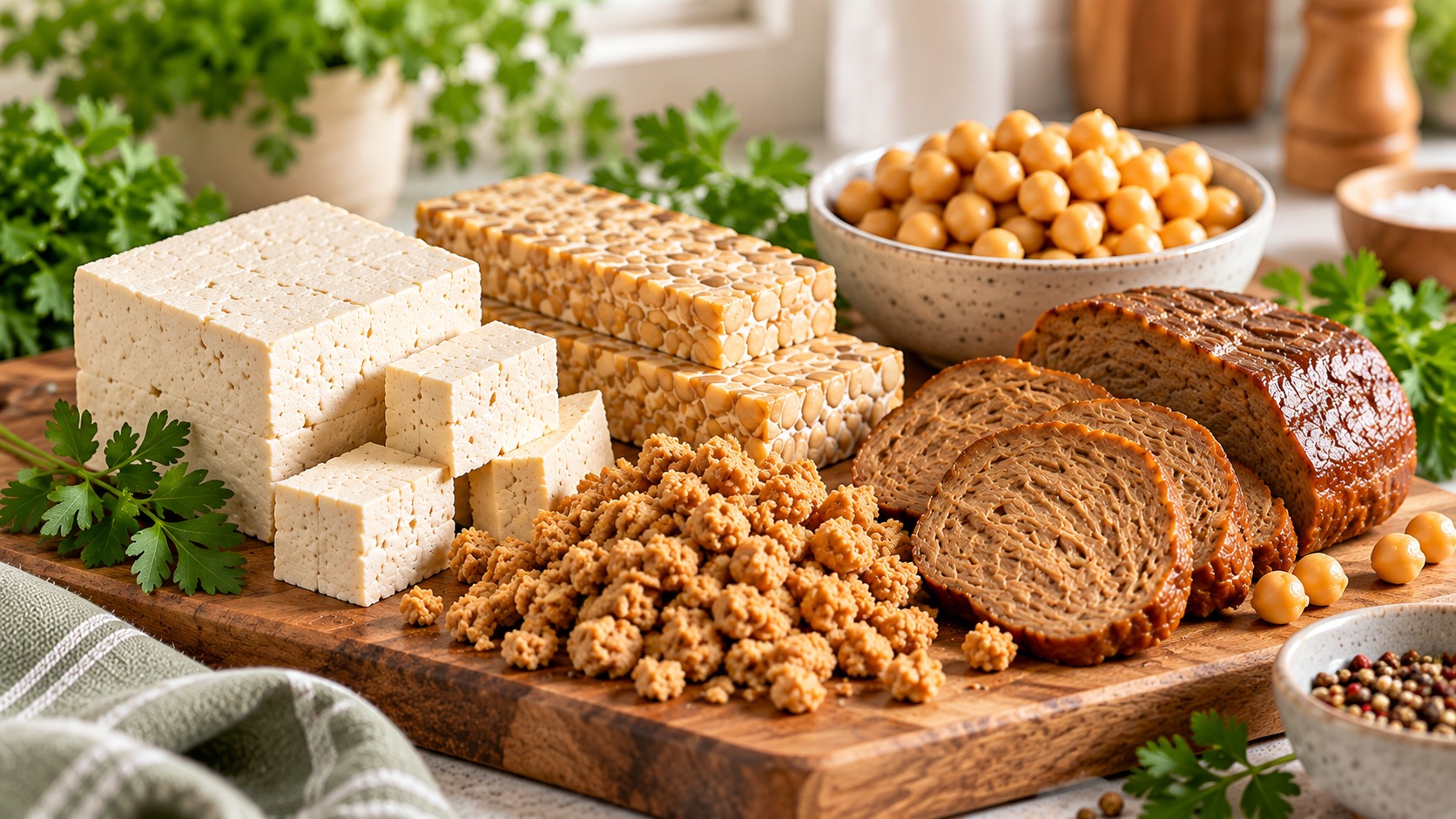
At a Glance
Tofu
Made from soy milk. Silken tofu is best for sauces, puddings and smoothies; firm and extra-firm tofu are better for baking, stir-fries, bowls and sandwiches.
Tempeh
Fermented whole soybeans with a firmer, nuttier texture. It holds marinades well and works especially well crumbled, sliced or cubed.
Seitan
A wheat-gluten protein with a chewy texture. It works well in strips, stews and sandwiches, but it is not appropriate for people who need to avoid gluten.
TVP
Textured vegetable protein is a shelf-stable soy product sold in granules, chunks or strips. It rehydrates quickly and is useful in chili, tacos, sloppy-joe style fillings and sauces.
How to Prepare Them
Tofu
Drain firm or extra-firm tofu. For a drier, crisper result, wrap it in a clean towel and press 15–30 minutes. Cut before marinating so more surface area is exposed.
Tempeh
Slice or cube it before marinating. If you find tempeh bitter, steam it for about 10 minutes first, then marinate and cook.
Seitan
Pat dry before browning. Because many packaged seitans are already seasoned, taste before adding extra salt.
TVP
Cover with hot water or low-sodium broth and let stand until tender, usually 5–10 minutes. Drain off excess liquid before seasoning.
Marinade Formula
Simple starting point
For about 14–16 oz of tofu or tempeh, try 2 tablespoons acid (lemon juice or vinegar), 1 tablespoon reduced-sodium tamari or soy sauce, 1 tablespoon olive oil, garlic, herbs and spices. Marinate 20 minutes to several hours.
Storage & Buying Tips
Refrigeration
Follow the package date and storage directions. Once opened, keep refrigerated in a covered container and use promptly.
Sodium
Seitan, flavored tofu, tempeh marinades and prepared meat substitutes can be high in sodium. Compare labels when blood pressure or sodium intake is a concern.
Protein variety
Beans, lentils, peas, nuts and seeds are excellent plant-protein choices too—these four foods are simply useful tools for adding texture and variety.